Answering
999 Calls
What happens when you dial 999?
What happens when you dial 999?
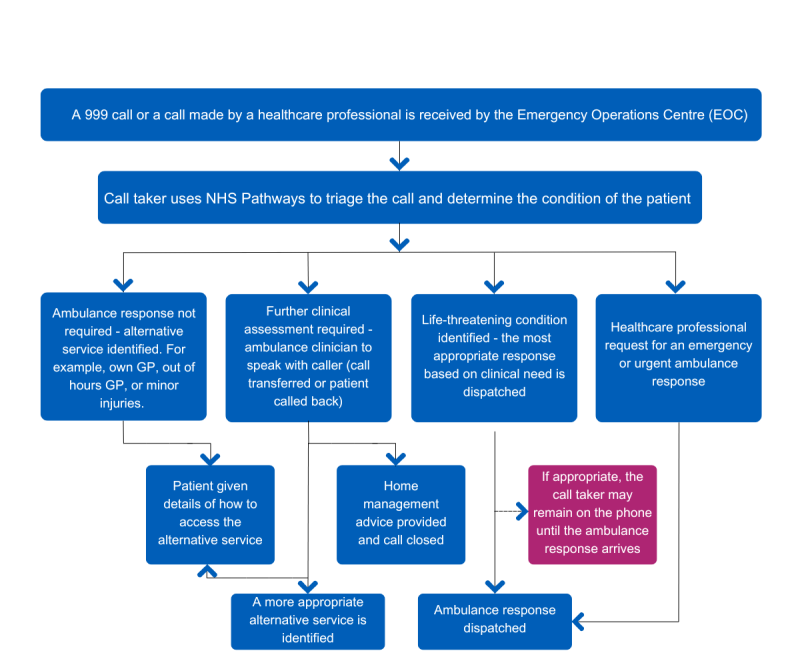
When you call 999, your call is directed to one of our Emergency Operations Centres (EOCs), where dedicated teams handle close to one million calls every year. Our call handlers are trained to quickly gather essential information and ensure that each patient receives the most appropriate care as quickly as possible.
To help assess each situation we use a specialist clinical triage system called NHS Pathways to determine the patient’s condition and level of urgency. By carefully triaging the patient’s symptoms, we can make informed decisions about the most suitable response based on their clinical needs
Our EOCs are also supported by clinically qualified staff who are able to take additional details, provide clinical advice over the phone, and ensure that patients receive the right support at the right time.
In some cases, an ambulance may not be the most appropriate response. Where suitable, patients will be referred to other healthcare services such as GPs, community nurses and A&E. This helps ensure that every patient is directed to the service best placed to meet their needs while keeping emergency resources available for those who need them most.
The chart below details what happens when we receive an emergency call.
Contacting 999 with hearing or communication difficulties
Calling 999 or 111 Booklet
The booklet below provides useful information to help you when calling 999 or 111 including: