An Eastbourne family has praised South East Coast Ambulance Service’s (SECAmb’s) emergency response to the unexpected birth of their son, highlighting the importance of emergency maternity care training.
For Nabeeha Nizar, an emergency response was needed when she went into unexpected, early labour at the family’s home in Eastbourne on 1 April 2026.
Resource Dispatcher, Gemma Hudson coordinated the ambulance response, ensuring the right resources were sent quickly. Crews arrived on scene in less than 10 minutes with the couples eldest 10-year-old son assisting them into the house.
While her husband, Jouhar Zaman Falaky, rushed back from work in London, crews carefully monitored Nabeeha as her contractions became more frequent. As the situation developed, crews had to make a critical decision about whether it was safest to transfer her to hospital or support the birth at home.
Operational Team Leader (OTL), Robin Bass, commented: “In maternity cases, things can escalate very quickly, so recognising when it is safest to stay on scene rather than move the patient is absolutely critical to ensure the best possible outcome for both mum and baby.”
Drawing on specialist maternity training and clinical assessment skills, the team determined that remaining at home was the safest option for Nabeeha and her baby.
Baby boy, Janaan, was safely delivered at home, with the team continuing to provide care and reassurance throughout. Once both Nabeeha and her newborn son were stable, they were transported to hospital for further care.
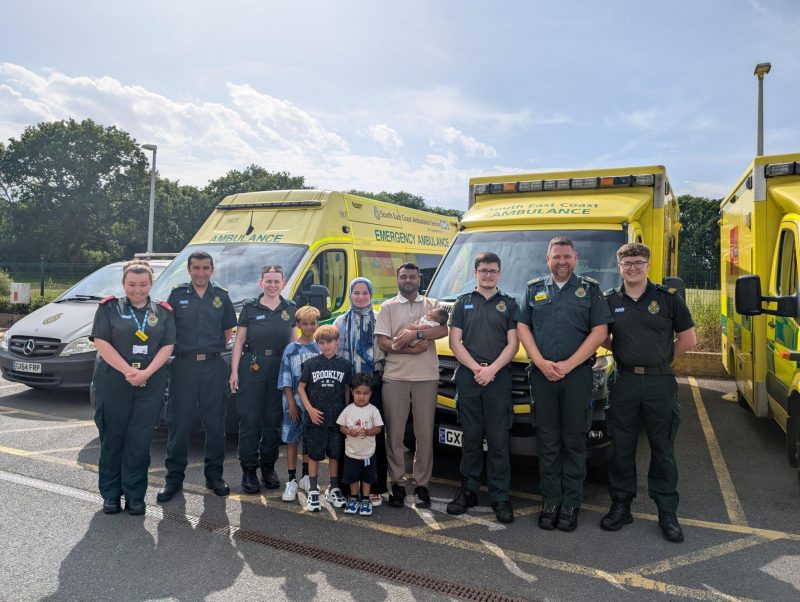
At a recent reunion at SECAmb’s Polegate Make Ready Centre, the family had the opportunity to meet the team who helped them: Resource Dispatcher Gemma, OTL Robin, Student Paramedic Adam Carr, Paramedic Maddison Russell, and Trainee Associate Ambulance Practitioners Jonathan Blair and James Brown. During the reunion, Nabeeha expressed her heartfelt thanks to the team.
She said: “What began as an unexpected and urgent situation became a deeply memorable experience thanks to the calmness, professionalism and compassion shown by everyone. Their teamwork and reassurance made all the difference at a frightening time. I felt completely supported and confident throughout.
“I’m also grateful for the kindness shown to my children and for ensuring we were safely taken to hospital. They played an unforgettable role in bringing my baby safely into the world.”
The incident highlights the importance of maintaining specialist maternity skills among ambulance clinicians, particularly when responding to time-critical emergencies outside of a hospital setting.
Student Paramedic, Adam, who attended the incident and had recently completed a maternity training course delivered by SECAmb’s Consultant Midwife, Dawn Kerslake, reflected on the value of the training: “Specialised out-of-hospital maternity care training really helps to build confidence in managing complex maternity scenarios. It ensures we’re prepared to respond effectively to these high-pressure situations, even when they don’t happen as often as other calls we receive.”
As one of the 11 Models of Care within the Trust’s clinical strategy, maternity care remains a key area of focus. SECAmb continues to invest in training, clinical leadership and partnership working to ensure clinicians feel confident and equipped to respond to often unpredictable and time-critical maternity emergencies. As one of only four ambulance trusts in England with a dedicated Consultant Midwife, the Trust is committed to delivering safe, high-quality and patient-centred care for women, babies and families.
Consultant Midwife, Dawn said: “This case demonstrates the importance of maintaining high-quality maternity training for ambulance clinicians. Although these incidents are less frequent, they require confidence, skill and up-to-date knowledge to manage safely. Working closely with regional midwives and ambulance colleagues helps ensure that patients receive the best possible care, wherever they are.”
SECAmb continues to strengthen its partnerships with regional midwives and healthcare providers through shared learning and joint training opportunities, helping ensure clinicians are equipped to deliver safe, effective care whenever and wherever it is needed.