For those living with daily pain, fatigue and dislocated joints, the hidden realities of Ehlers-Danlos syndromes can be life-changing.
This awareness month, two colleagues are helping raise awareness and shine a light on the challenges faced by those living with the condition.
Ehlers-Danlos syndromes (EDS) are a group of 13 genetic connective tissue disorders primarily characterised by joint hypermobility, fragile skin, chronic pain and a wide range of associated symptoms.
 Severity can vary significantly, with some people experiencing mild symptoms and others facing life-changing complications.
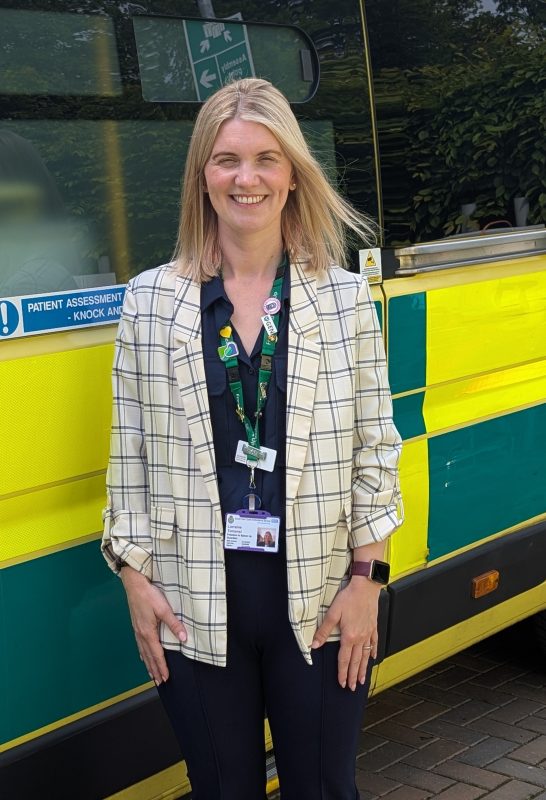
For Freedom to Speak Up Guardian, Lorraine Tomassi, receiving a diagnosis was a long and difficult journey.
“It took me a really long time to be diagnosed with EDS, which I now understand is quite common,” she said.
Lorraine explained that her symptoms can fluctuate dramatically, with periods where she requires mobility aids such as a wheelchair or walking frame, while at other times she may not need any support at all.
“I experience flares and exacerbations of my EDS symptoms, which can fluctuate significantly. My mobility can range from needing to use a wheelchair or walking frame during a difficult flare, to not needing any support at all. For me, this is one of the most challenging aspects of having a disability, because the changes can be so extreme from one end of the scale to the other.”
As many of Lorraine’s symptoms are invisible, she says this can sometimes affect other people’s perceptions and expectations.
EDS affects Lorraine’s joints and causes recurring dislocations, gastrointestinal difficulties and associated comorbidities including Postural Orthostatic Tachycardia Syndrome (POTS) and Mast Cell Activation Syndrome (MCAS). Despite the challenges, Lorraine is passionate about helping others understand the condition.
“I am grateful for opportunities to raise awareness of EDS as it can affect people’s lives in many different ways and the variation is so broad. I try to see it as something that has forced me to view life through a different lens. It has actually helped open my eyes and helped me discover other things I enjoy, such as Reiki, which I might never have considered before. So, even though it can be difficult in many ways, it has brought me blessings.”
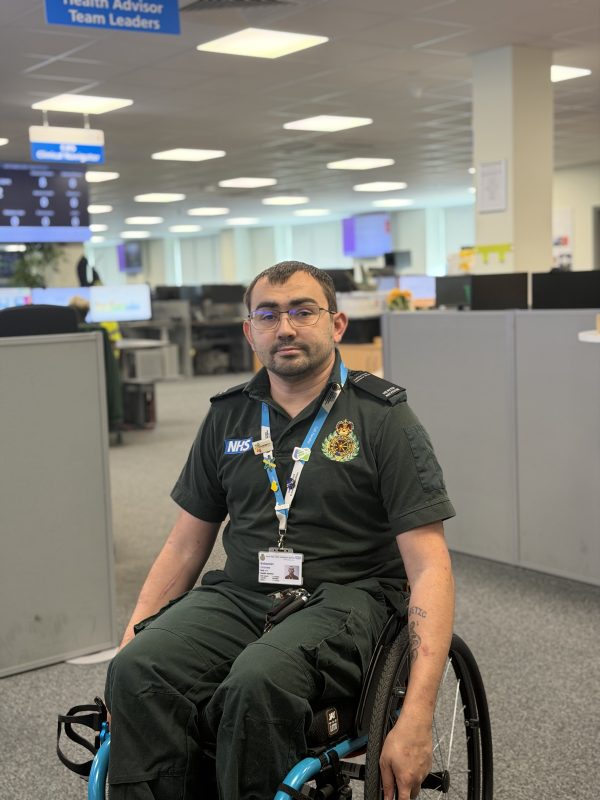 111 Health Advisor, Sebastian Groves also lives with the daily impact of EDS, describing how the condition affects nearly every aspect of his life.
“Most mornings I wake up with one or more joints dislocated. The pain from these episodes often lingers for several days, affecting my mobility and my ability to carry out everyday tasks.”
Sebastian explained that he has also experienced dislocations while at work and relies on supportive equipment to continue carrying out his role.
“I deal with recurring gastrointestinal issues that are worsened by my condition, and my healing is noticeably slower than average. Even a minor bump can cause skin tears or wounds, which then take extended time to recover. I often feel drained and fatigued, as though my energy has been siphoned away before the day has even begun.”
While EDS presents ongoing difficulties, Sebastian is determined not to let the condition define him.
Throughout EDS Awareness Month, colleagues are encouraged to learn more about invisible disabilities and the importance of recognising that not all conditions are immediately visible. Click here to read more.
“Ehlers-Danlos Syndrome complicates my life in countless ways, but it will never be the title of my story. It is part of my experience, not the definition of who I am.”