South East Coast Ambulance Service (SECAmb) is highlighting the disparities in cardiac arrest response for men and women and encouraging everyone to learn to save a life this National Heart Month.
Women are around 27 per cent less likely to receive bystander CPR than men and are more likely to die because their bra is not removed when a defibrillator is used*. As part of National Heart Month in February, SECAmb is calling for improved public education and confidence so that more people receive fast and effective help in a cardiac emergency, regardless of gender.
Out-of-hospital cardiac arrest remains one of the UK’s leading causes of death, with only around one in 10 people surviving. Every minute without CPR and defibrillation reduces a person’s chance of survival by around 10 per cent, making early intervention critical.
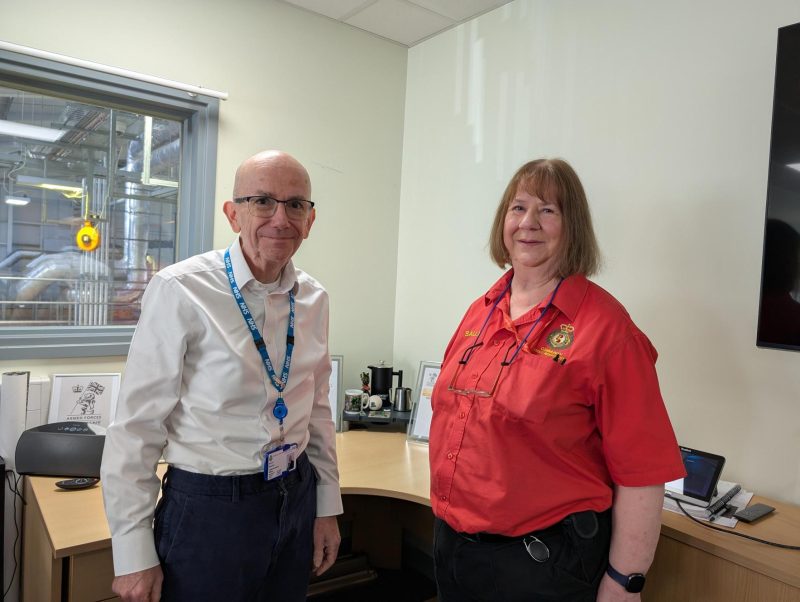
One of SECAmb’s Community First Responders (CFRs), Sally Holmes, has been reinforcing this message during CPR training sessions by highlighting the work of the charity ‘Bra Off, Defib On’. This poignant message challenges misconceptions and encourages greater confidence in providing CPR and defibrillation to women, supporting changes in behaviour that could help save lives.
Last year, Sally delivered 54 CPR and defibrillation training sessions across her local area and further afield, helping people build the knowledge and confidence to act quickly in an emergency. Sally recently met with SECAmb’s Chief Executive, Simon Weldon, who thanked her personally for her commitment and dedication to addressing this challenge and helping more people feel confident in providing CPR.
Sally said: “I see first-hand how empowering CPR training can be. Many people are surprised by how simple it is, and how just a few minutes of learning can prepare them to act in a real emergency.
“It’s also essential that we address the barriers that stop women from receiving CPR and defibrillation. By raising awareness of campaigns like ‘Bra Off, Defib On’, we can help people feel confident to act quickly and appropriately, regardless of gender, and ultimately save more lives.”
Thanks to the efforts of SECAmb staff and volunteers – and the support of the public – the Trust achieved its second highest survival rate on record in 2024–25, with 11.4 per cent of patients surviving to 30 days post-arrest. However, with greater public involvement, even more lives could be saved.
Consultant Paramedic for Critical Care & Resuscitation, Dan Cody said: “When someone goes into cardiac arrest, the actions taken by people nearby before an ambulance arrives can be the difference between life and death. Early intervention significantly improves the chances of survival, yet we see many people still feeling unsure about stepping in.
“National Heart Month is a fantastic opportunity to remind everyone that learning these simple skills – and having the confidence to use them – can save lives and protect more people in our communities.”
Further information and resources on learning CPR is available on SECAmb’s CPR webpage – www.secamb.nhs.uk/cpr/.
*Statistic sourced from Bra Off, Defib On charity