A Sussex teenager who suffered potentially life-threatening injuries in a bike crash is back riding months later, highlighting the vital role helmets can play in cyclists’ safety.
14-year-old, Adem Murphy-Farah, was riding at Hove Pump Track on 5 May 2026 when he was thrown from his bike in a serious incident that left him with a brain haemorrhage, multiple facial fractures and the loss of two teeth.
Emergency crews from South East Coast Ambulance Service (SECAmb) were dispatched to the scene and provided urgent treatment before Adem was taken to hospital.
Adem spent just over a week in St. George’s Hospital in Tooting, much of it in intensive care and is now on the road to recovery. Despite the severity of his injuries, has already returned to doing what he loves most, riding his bike.
Critical Care Paramedic (CCP), Ben Spashett, who attended the incident, said the crash highlights the importance of wearing appropriate protective equipment whenever cycling, whether that be on the road, trail or pump track.
Ben said: "Adem had suffered some significant injuries, so it was important that he received the right treatment quickly. Seeing him back on his bike and doing so well was fantastic and reminds us why we do this job.
"His helmet undoubtedly took some of the force of the impact and highlights the difference protective equipment can make in helping reduce the risk of serious head and brain injuries, which are among the most serious injuries cyclists can experience in a crash."
Having suffered a serious head injury, Adem’s experience reflects wider evidence around helmet use. Research using NHS England data from more than 11,000 injured cyclists found that helmet use was associated with a significant reduction in severe traumatic brain injury. Among cyclists studied, 47.6 per cent of those not wearing a helmet sustained a severe traumatic brain injury, compared with 19.1 per cent of those who were wearing one.
Although Adem was riding on a purpose-built pump track rather than a road, a full-face helmet could have offered additional protection, particularly to his face. Adem, his family and SECAmb are encouraging cyclists to choose protective equipment that is suited to the type of riding they do, helping to reduce the risk of serious injury.
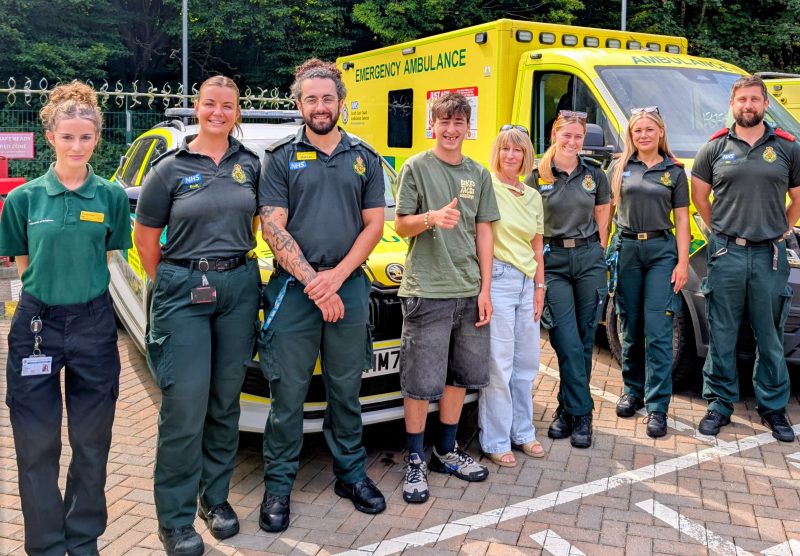
As part of his recovery, Adem recently visited SECAmb’s Brighton Make Ready Centre to meet the crews who cared for him on one of the worst days of his life.
Among those he was able to thank in person were Student Paramedic Mia Calvo, Paramedics Eleanor Walsh and Adam Lamb, Associate Ambulance Practitioner (AAP) Emily Smith, Emergency Medical Advisor (EMA) Gemma Firman and CCP Ben Spashett.
Mia commented: "I'll always remember looking after Adem because of the seriousness of his injuries and the fact I ended up becoming responsible for one of his missing teeth. It was brilliant to see him again; hear how well he's doing and know that he's been able to get back to riding his bike."
Speaking during the visit, Adem thanked everyone involved in his care: "I don't remember much about what happened, but I've been told how many people helped me that day. It was really nice to meet everyone and thank them in person. I'm grateful for everything they did for me and I'm happy to be back riding my bike again."
His mum, Eimear, added: "It was every parent's worst nightmare getting the call that Adem had been seriously injured. The care and compassion shown by everyone involved, from the call handlers to the ambulance crews and hospital staff, was amazing. We will always be grateful for everything they did for our son."
While the reunion brought back plenty of memories, there was one item missing from the occasion. Sadly, Adem’s helmet, which played a vital role in protecting him during the crash, could not be reunited with him.
For the team invovled in his care, Adem’s recovery is an encouraging outcome following a serious incident and a reminder that crashes can happen anywhere.
While no item of safety equipment can prevent injury, Adem’s experience demonstrates the important role helmets can play in helping reduce the risk of serious injury.
The visit served as a powerful reminder that serious injuries can happen anywhere people cycle, whether on roads, trails or pump tracks and that wearing the correct safety equipment can make a significant difference.