A paramedic from Surrey is taking on an ‘oarsome’ challenge, attempting to row 2,000 miles around the Great British coastline.
Kit Nelson is part of the six-strong Nautilus team tackling the GB Row Challenge, putting their strength, stamina and resilience to the test while gathering research to preserve marine environments and wildlife.
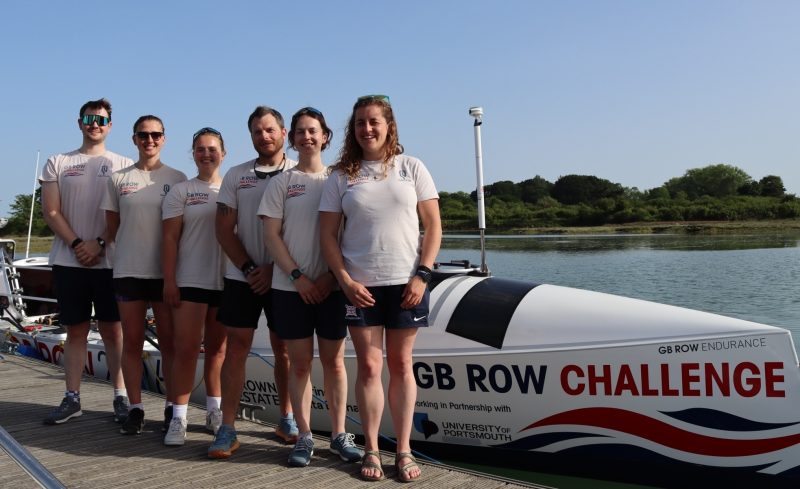
Kit Nelson (first left) with the rest of the Nautilus crew taking on the GB Row challenge.
“This is very much a leap into the deep end when it comes to endurance challenges,” said the 26-year-old paramedic, based at South East Coast Ambulance Service’s Chertsey station, who had no previous rowing experience before getting involved.
“I still wouldn't call myself a ‘rower’ – just someone who happens to be rowing. Four out of the six people in our team had never touched an oar before we signed up to this and only our skipper had done ocean rowing.”
Kit says the difficult nature of the event is what makes it so appealing.
“It’s also a challenge that many people haven’t heard much about. The Atlantic Row tends to attract more media attention, but GB Row brings an entirely different set of difficulties. The geography, heavy shipping traffic, and – most importantly – the tides make it a navigational nightmare at times, with significant risks around certain parts of the coastline.”
The team will set off from Tower Bridge on Sunday 14 June, aiming to finish at the same point after rowing out to sea and circumnavigating Great Britain. If all goes well, there’s the possibility of achieving a world record if they can return in less than 49 days, although Kit says that’s not the main aim.
“The scientific data we’ll be collecting adds another really important dimension to the challenge – one that will hopefully have a lasting impact long after the row is over."
“We’re gathering data on microplastics, environmental DNA, water temperature, underwater sound, and more. This information will be processed by the University of Portsmouth and could contribute to research and legislation that helps improve how we protect our oceans and marine life. It gives the whole challenge a much bigger purpose beyond just personal achievement.”
Another element to the challenge is that it is entirely unsupported. There are no support boats or supply drops, and no touching land unless it’s an emergency.
“We carry all of our food on board in the form of ration packs and dehydrated meals. We have a Jetboil stove to heat water, which then gets mixed into what is usually a slightly cold, slightly crunchy mush claiming to be shepherd’s pie or something similar,” said Kit. “Alongside that, we’ve made our own porridge packs and snack bags to help meet the huge calorie demands of the challenge.
“For sleeping, we have two cabins at either end of the boat — although ‘cabin’ probably makes them sound far more glamorous than they really are. They’re packed with personal kit, scientific equipment, and safety gear, so we have to contort ourselves around everything just to lie down. We row in a two-hours-on, two-hours-off pattern, which means sleep will be limited and broken throughout the challenge,” he added.
“The toilet situation is probably the thing I get asked about most often, and the simple answer is: a bucket. The less said about that, the better.”
Kit says he has enjoyed learning new skills for the challenge, completing courses in VHF radio operation, sea survival and first aid at sea, alongside training in navigation, maritime law, and tidal conditions.
“Hopefully, knowing that I’m capable of getting through the pain, the harsh conditions, and the constant monotonous rocking of the waves will give me a huge sense of achievement by the end,” he said. “I’m not at my best when I’m tired, hungry, and seasick, so I imagine the overwhelming feeling at the finish line will probably be relief more than anything else.
“At the same time, I think the ever-changing coastline and the marine wildlife we’ll encounter along the way will be what keeps me going. We’ve already had a few seals pop up beside the boat to say hello, which was a pretty special moment.”
To find out more at the GB Row Challenge, click here.