
Paramedics at South East Coast Ambulance Service (SECAmb) are optimistic about the potential of AI (Artificial Intelligence) to support pre-hospital care but are clear that ultimate responsibility and professional judgement should remain with clinicians.
That’s a key finding presented by a team of SECAmb paramedics from Chertsey following a 10-month research project exploring how AI could support clinical practice in ambulance services.
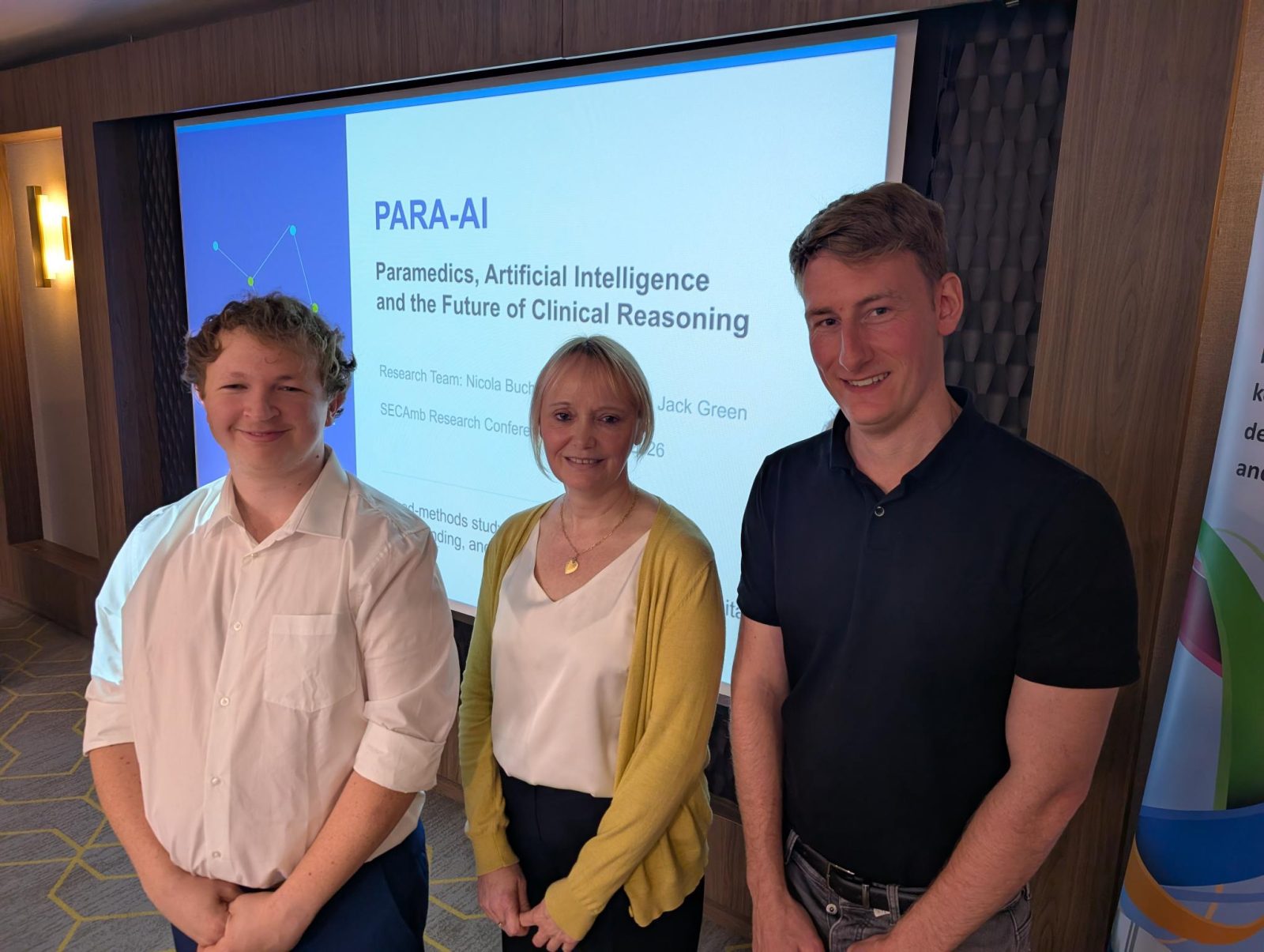
Paramedics, Nicola Buchan, Jay Garland and Jack Green presented their ‘PARA-AI’ project findings this week at SECAmb’s 10th Clinical Research Summit for staff and affiliated students which explored AI research in pre-hospital healthcare.
The team’s mixed-methods study explored experiences, understanding and attitudes towards AI in pre-hospital care, drawing on 171 survey responses and 14 in-depth interviews with SECAmb paramedics.
Findings revealed considerable optimism about AI’s potential to support clinical decision-making, patient safety and efficiency. However, respondents emphasised the importance of maintaining professional judgement, with more than 96 per cent agreeing that final clinical responsibility should remain with paramedics.
Encouragingly, 83 per cent indicated they would be willing to use AI technology clinically with appropriate safeguards in place.
Other findings included:
- 92 per cent believed paramedics should be involved in designing and testing AI tools
- 80 per cent said clear governance, audit processes and accountability would increase their trust in AI
- 83 per cent expressed concerns about becoming overly reliant on AI – the research highlights the importance of using AI to support, rather than replace, independent clinical reasoning
The team has used the findings to develop a roadmap offering a potential framework for introducing AI safely and responsibly within ambulance services, which will be presented to key stakeholders in the coming months.
The team’s abstract has also been accepted for poster presentation at the Royal College of Paramedics Education Conference in Edinburgh in December, providing an opportunity to share the findings nationally.
Jay said: "Undertaking this research alongside our clinical roles has been challenging but incredibly rewarding. We've had the privilege of hearing directly from colleagues about their hopes and concerns around AI and it's been fascinating to see how those perspectives have shaped our findings. We've also learnt a huge amount about conducting research and the value of collaboration."
Nicola added: "What's particularly exciting is that we've been able to turn the findings into something practical. Our roadmap provides a starting point for conversations about how AI might be introduced safely, while protecting the clinical judgement and human interaction that are so important in paramedic practice."
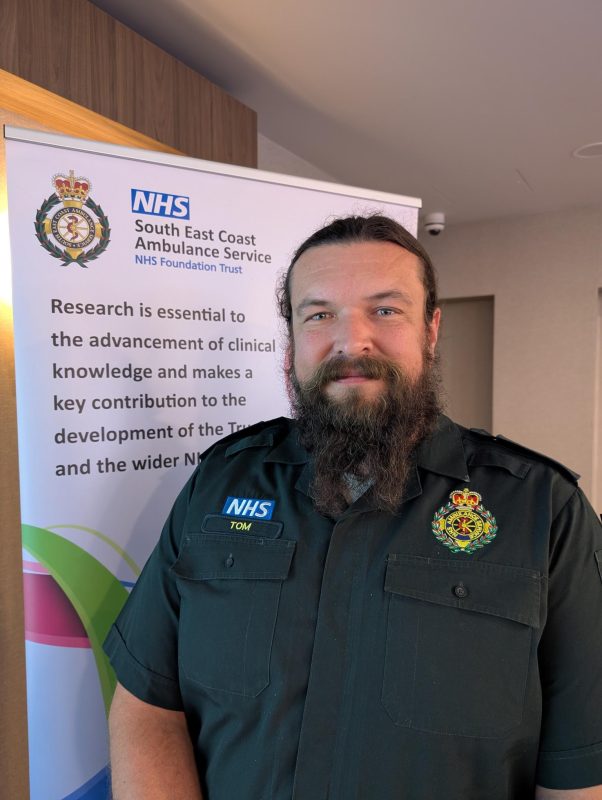 Attendees also heard from SECAmb Operational Team Leader, Thomas Whately, from Ashford, whose study, AI Technology for Prehospital Assessment and Care Excellence, known as AT PACE, will simulate scenarios with 50 participants to evaluate how AI could support electronic Patient Clinical Record documentation. The study will also test whether wearable technology, in the form of a head-mounted, voice- operated device, can change the experience of using AI.
Summit Chair and Paramedic Senior Research Fellow at SECAmb, Dr Jack Barrett added: “The summit highlighted the importance of research in understanding where AI could make a difference to patient care. Projects such as PARA-AI and AT-PACE will help ensure colleagues’ views remain central to the conversation.
“I’d like to thank all our presenters and for colleagues attending in their own time. Research and innovation are integral to supporting our clinically-led strategy, helping us explore how we evolve with new approaches to pre-hospital care and build the evidence needed to improve outcomes for our patients.”