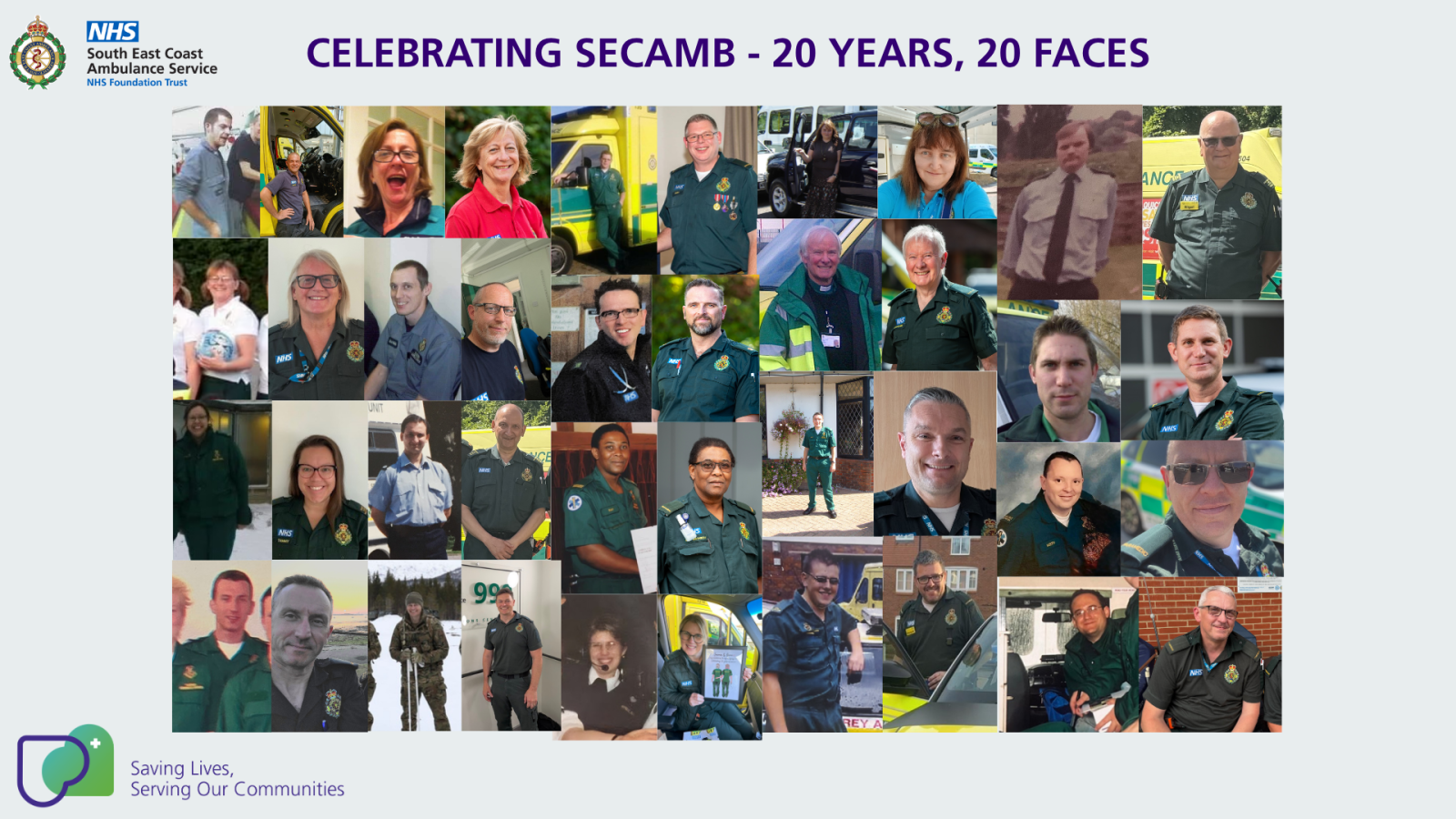
For two decades, South East Coast Ambulance Service (SECAmb) has been at the heart of communities across our region, providing life-saving and compassionate care to millions of patients.
Today, (Wednesday 1 July), we proudly mark 20 years as an organisation and celebrate the thousands of staff and volunteers whose dedication and professionalism have shaped SECAmb since its formation in 2006 through the merger of Kent, Surrey and Sussex ambulance services.
In 20 years, our 999 call volume has more than doubled to in excess of one million calls a year. Alongside the calls handled by our NHS 111 teams, we now support more than two million patient interactions each year and play a pivotal role across urgent and emergency care.
We are now focused on delivering our ambitious, clinically-led strategy, supporting the direction set out in the NHS 10-Year Plan. This includes strengthening clinical assessment and virtual care so that, despite increasing demand, more patients receive the right care first time, and we can respond quickly to those who are seriously ill or injured.
Our strategy also sets out our commitment to make better use of technology, develop our workforce and further strengthen partnerships across the local health and social care system.
SECAmb Chief Executive Jen Allan said: “On SECAmb’s anniversary I want to thank everyone who has helped shape our service.
“While there have been changes to how care is delivered, one thing has remained constant – the dedication of our teams and their commitment to patients. Recent CQC inspection reports of our service highlight this, praising the compassionate, person-centred provided every day.
“We’ve set out an ambitious vision for the future. By embracing innovation, strengthening virtual care and continuing to invest in colleagues, we will remain a modern, clinically-led ambulance service able to meet the changing needs of our patients while keeping compassion and kindness at the centre of everything we do.
“As we look ahead, I’m confident that the same dedication, compassion and commitment that has defined SECAmb for 20 years will continue to guide us to deliver the best possible care for our patients and communities.”
20 Years through their eyes
As we mark our 20th anniversary, three colleagues who have been part of the organisation since its formation reflect on the changes they have seen and the pride they feel in serving their communities.
Mark Haydon, Paramedic and Quality Lead
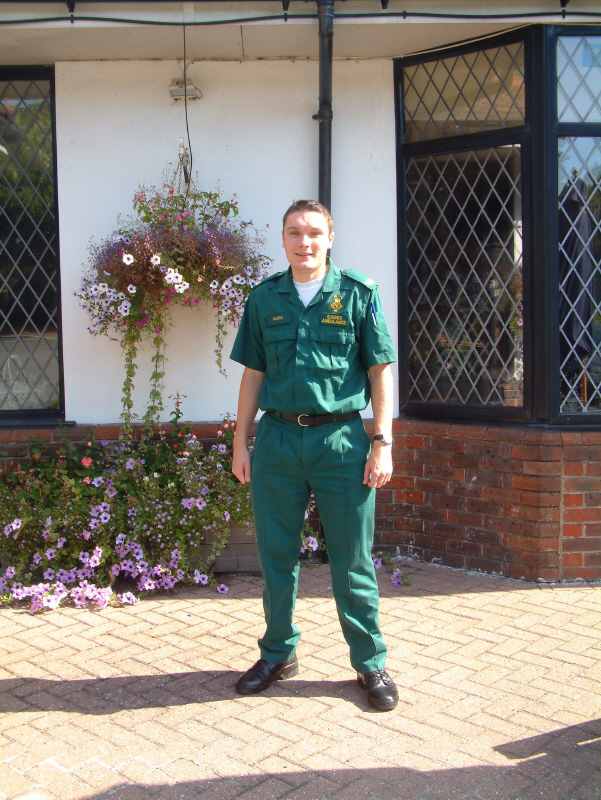 Mark joined Sussex Ambulance Service in 2002 working for patient transport, a common route into the ambulance service at the time. He qualified as an ambulance technician the following year before progressing to become a paramedic in 2011.
Since then, he has worked across a wide range of roles, including dual role in our Emergency Operations Centres and on the road, as well as managing clinical teams in EOC. He now works in a senior role overseeing patient safety within our Quality and Nursing department.
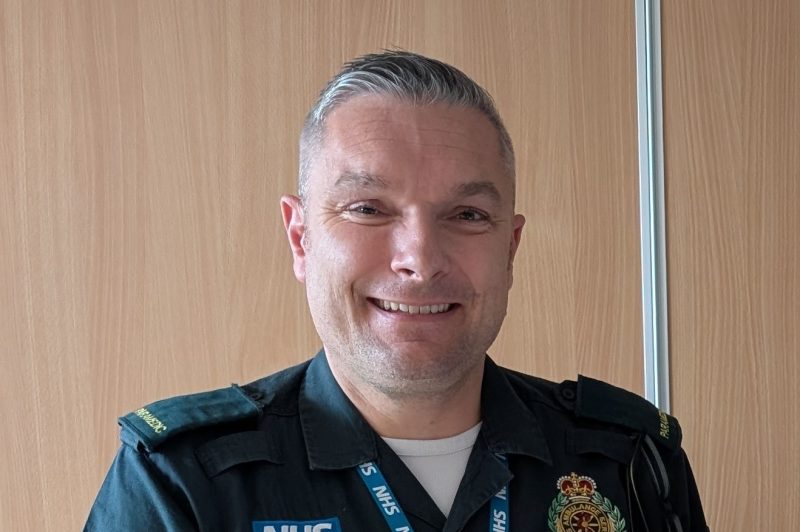 “Over the years, SECAmb has given me so many opportunities to learn, develop and progress. I’ve always felt supported throughout my career and I’ve also worked with some amazing colleagues. They’ve taught me the importance of continuing to learn, reflect and improve, both as individuals and as an organisation so that we can provide the best possible care.
“I’ve also seen the role of clinicians evolve significantly. As paramedics, we have a greater scope of practice and also greater access to support through our clinical hubs and clinicians in EOC, helping us make the right decisions for patients.
“The most important thing for me remains the connection to our patients. I still make sure I respond to calls – it’s why I chose to join the ambulance service.
“Demand has grown and we’re providing care differently. We’re increasing the percentage of care provided virtually but the need for compassionate care, either over the phone or face-to-face, remains.
“You’re helping people at some of the most difficult moments in their lives, and showing empathy is just as important as clinical skill. I’m incredibly proud to work for SECAmb and to be part of an organisation that makes a difference to so many people every day.”
Gary Turley, Paramedic, Ashford, Kent
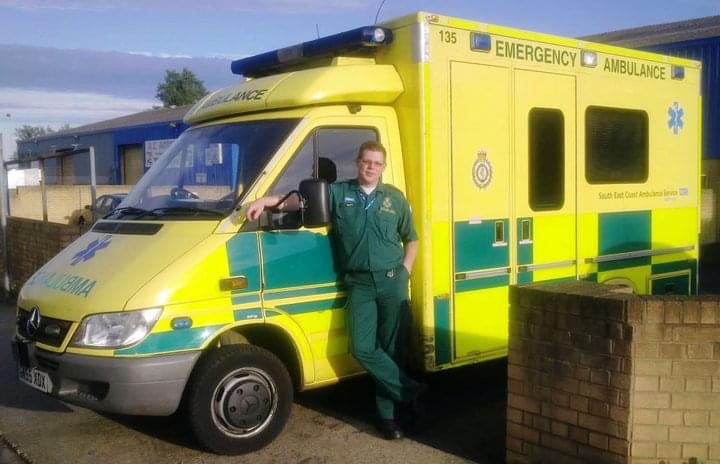 Gary joined the NHS in April 1999 as a 19-year-old Ambulance Care Assistant with Patient Transport Service (PTS). Over the past 27 years, he has worked across a range of operational and clinical roles, including PTS controller and planner, ambulance technician, resource dispatcher, dispatch team leader and paramedic. He has witnessed significant changes in patient care, clinical pathways and partnership working across the health service.
“I started working for what was the Kent & Sussex Weald NHS Trust as an Ambulance Care Assistant on the Patient Transport Service (PTS) on in April 1999, at just 19 years old. Kent Ambulance Service took over the PTS contract in April 2000 and I became PTS controller and planner in 2001 before starting my ambulance technician course in 2002.
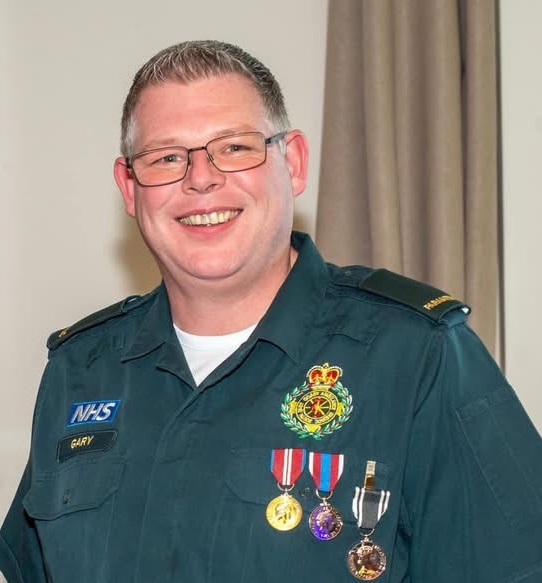 “My first shift on the road was November 2002 at Sevenoaks before I transferred to Ashford Ambulance Station in 2004. While working at Ashford, there was an opportunity for clinical staff to dual role as dispatchers in 2005 and I was one of 10 who took up the opportunity. I then had a nine-month secondment as a dispatch team leader and continued my dual role until I started my paramedic degree at St George’s University in August 2018.
“Being dual role trained helps me explain each side of the role to the other, to help dispatchers understand the difficulties on the road, distances and facilities available, but also to help road colleagues understand the challenges of not only dispatch, but Emergency Medical Advisors (EMAs) too. Continuing to dual role now means I can be flexible, provide resilience and move to work where most needed.”
“I’ve seen many changes, for the better for our patients. When I first started, suspected heart attack patients were taken to the local A&E for diagnosis. Then paramedics could give a thrombolytic drug before transfer to the local A&E if they met strict criteria. Now we can send an ECG directly to the cardiac consultant and transport directly to theatre at the PPCI at William Harvey Hospital.
“I have also seen the stroke pathway develop. There was a time that anyone suffering a stroke had to be less than 80 years old, have their stroke between 9am and 5pm Monday to Friday and get to hospital within three hours of symptom onset to be accepted by the specialist stroke teams.
“Partnership working with local hospitals and community teams has developed massively in the last 20 years and I’m proud to have celebrated 27 years in the NHS.”
Surrey – Tessa Weaver, Community First Responder (CFR) Team Leader, Guildford
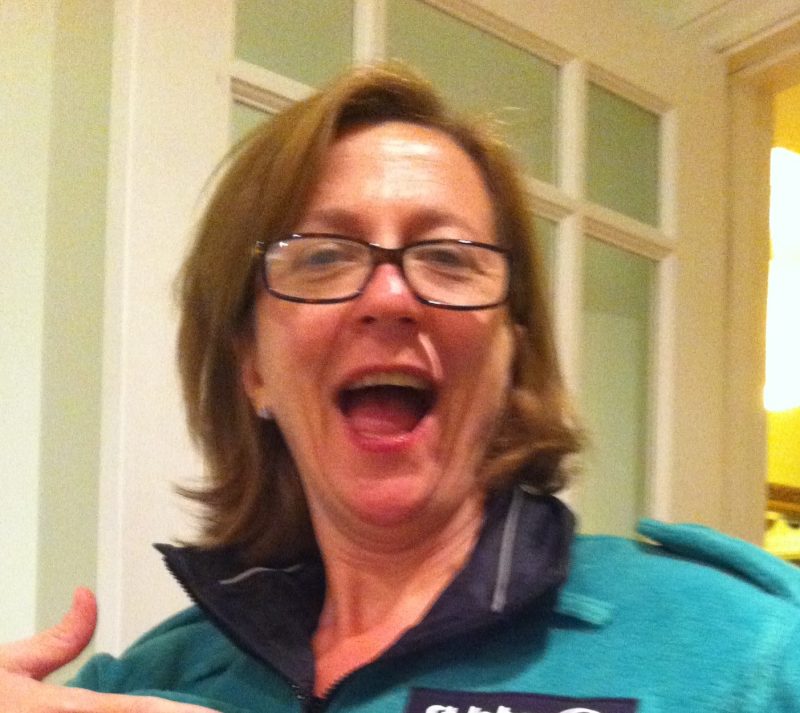 Tessa has been providing exceptional community service for two decades. One of our original Surrey CFRs, she now leads our Guildford team.
CFRs are volunteer members of their community who are trained to respond to emergency calls in, alongside our clinicians.
Responding in the areas where they live or work, they are able to attend the scene of an emergency within a few minutes and often before the emergency service arrives.
Tessa first signed up to volunteer after witnessing an accident just over 20 years ago.
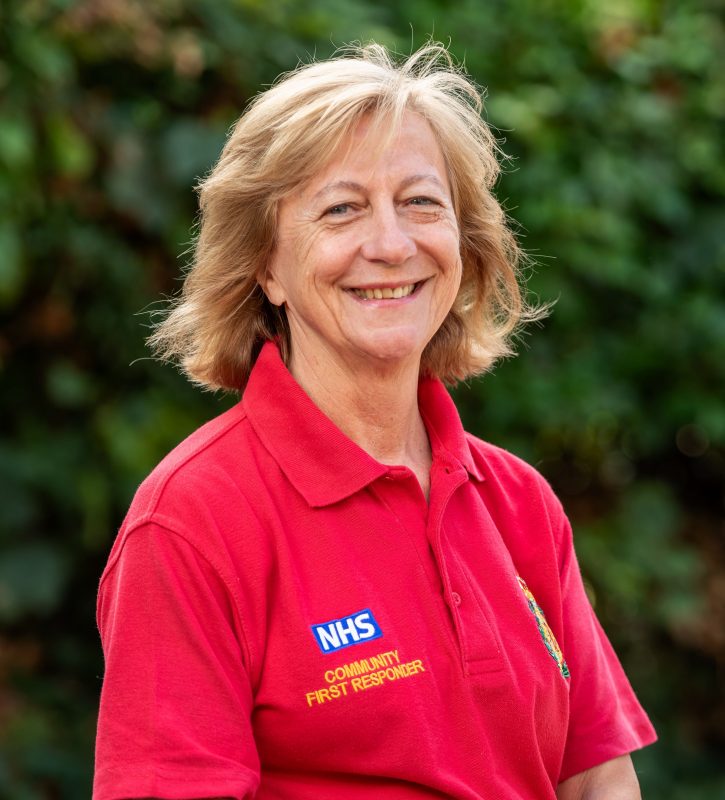 “My car came with a first aid box. I picked it up and walked towards the casualty and someone said: ‘I’m so glad there’s someone here who knows what to do’.”
“I was hugely relieved until I realised they thought I was the one who knew what to do. I decided I’d better find out. Very shortly afterwards, the CFR role was featured in the local newspaper, and I signed up.
“I didn’t know back in 2006 how much I’d be signing up for, but volunteering for SECAmb has been so fulfilling. It’s been a pleasure and a privilege working with the frontline clinicians as well as our dispatchers and support teams. I am very proud to be a SECAmb CFR.”