
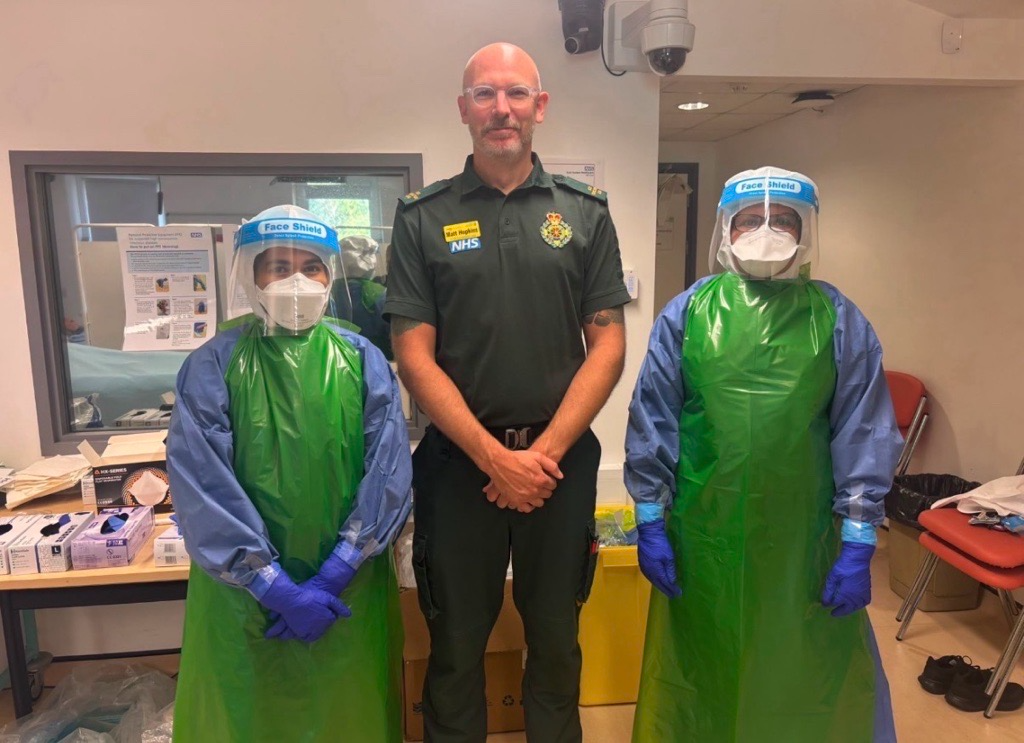
PPE training courses to cover High Consequence Infectious Disease (HCID) scenarios have proven so successful, SECAmb instructors developed an in-hospital version to teach at acute hospitals across the South East.
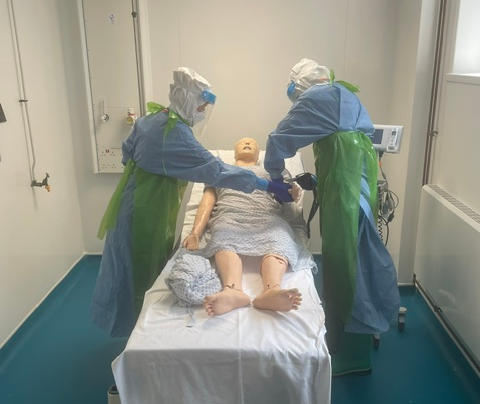 NHS England instructed there should be a unified approach regarding PPE for acute hospitals nationwide when dealing with suspected HCID cases, creating a need for more training options.
Utilising its specialist trainers experienced in these situations, a SECAmb team created a bespoke course to train NHS staff on how to safely use the PPE ensemble recommended for assessing HCID patients.
“We have run 13 trainer courses since January and 9 days of in-hospital wearer courses. In total that’s 75 individual trainers trained and 72 wearers signed off,” said Matt Hopkins, SECAmb’s HCID Educational Lead.
Initially set up and held at Haywards Heath College, demand for the training saw the in-hospital version of the course developed.
“This meant we could train their staff in a more convenient place,” said Matt. “Plus we could visit their isolation areas to give our feedback – in some places we were actually able to train in situ. This was very useful especially as I could also provide the ambulance service’s point of view.”
There has been a greater focus on HCIDs this year, following widely reported outbreaks of Hantavirus on a cruise ship and Ebola in African regions.
“It’s been fascinating learning how hospitals respond to HCIDs, how SECAmb plays a part in that and how we can improve our services for mutual gain. Some of these hospitals have had patients coming in with potential HCIDs – none have been confirmed thankfully. But it’s been great to receive feedback about their response.”
Response to the training has been overwhelmingly positive. Instructors were rated five out of five by 100% of attendees, with 92% also recording a five-star rating for the overall experience.
 Two courses are available, the Wearer and the Trainer. The first teaches how to wear PPE, how to correctly don and doff it, and how to be a ‘buddy’ to help a colleague with their PPE. This is a whole day course with practical exercises and simulations.
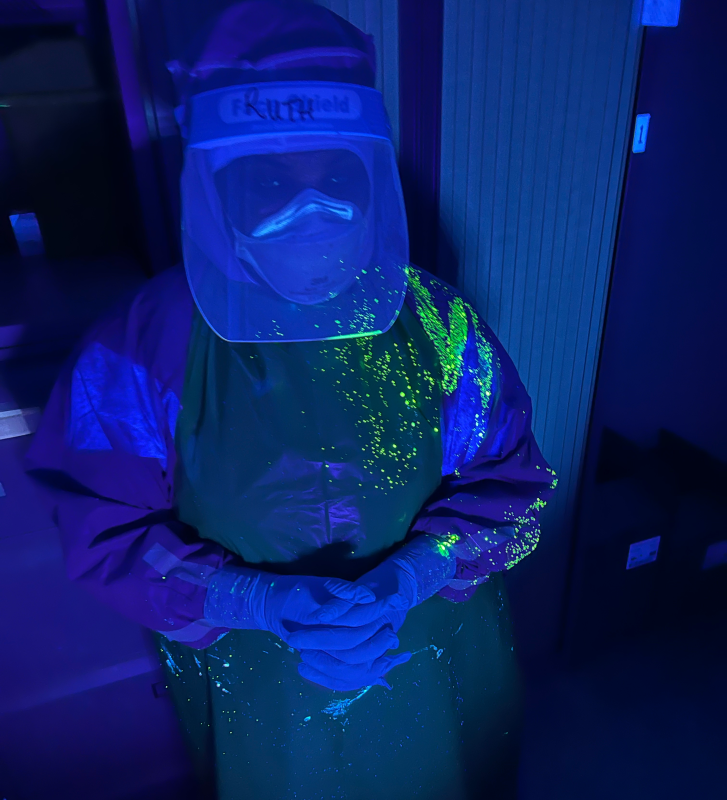
The second course has candidates taught the skills required to train their own staff. For the active scenarios, ultraviolet spray is used to mimic contamination, showing the candidates the potential to spread contamination and how to reduce it while also gaining trust in the PPE’s effectiveness.
The training is open to any NHS staff that could be expected to wear, or train, the Unified HCID PPE ensemble. For further information, contact Matt Hopkins via matt.hopkins@secamb.nhs.uk.